a tree blog
JUNE 2026
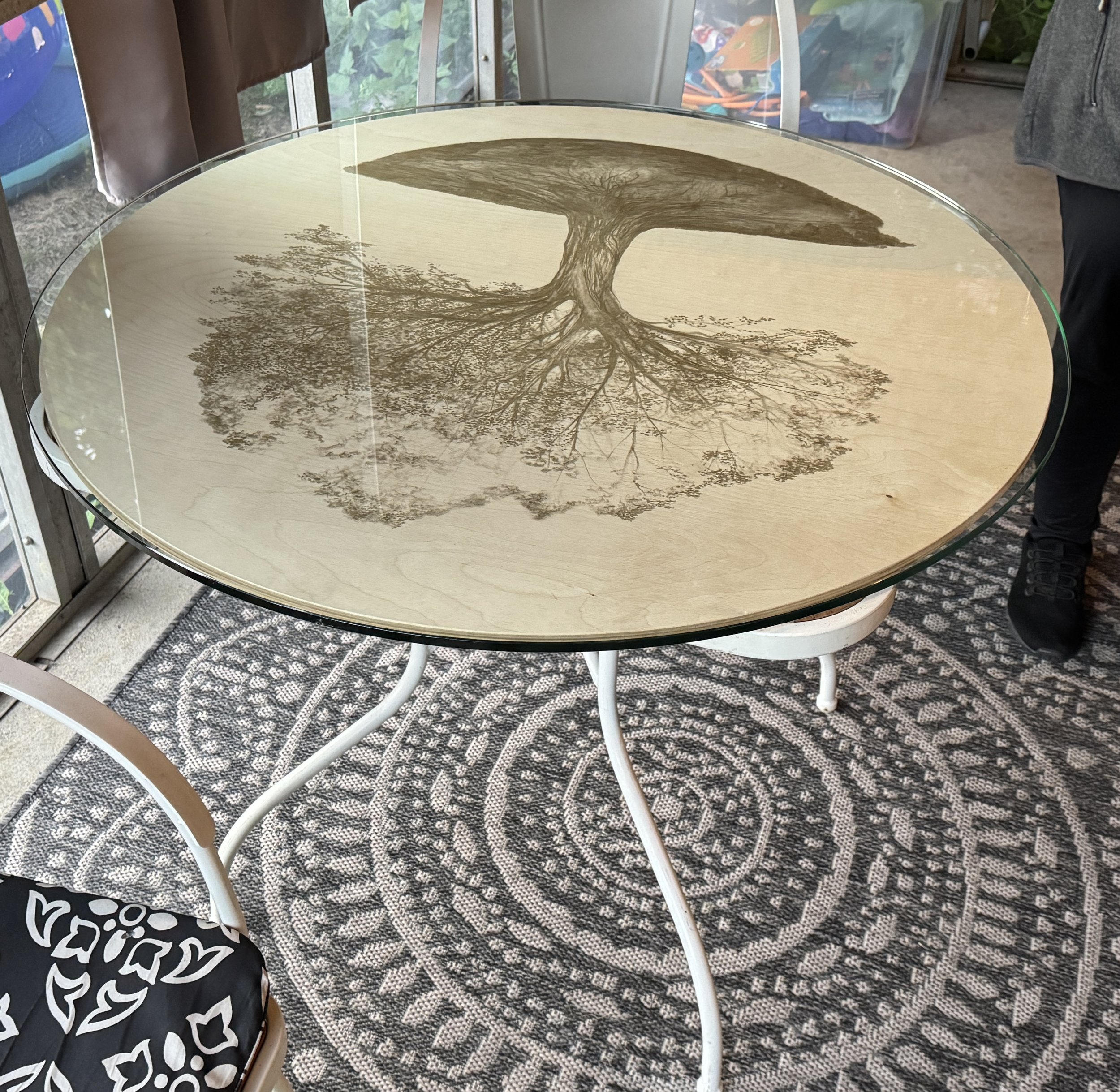
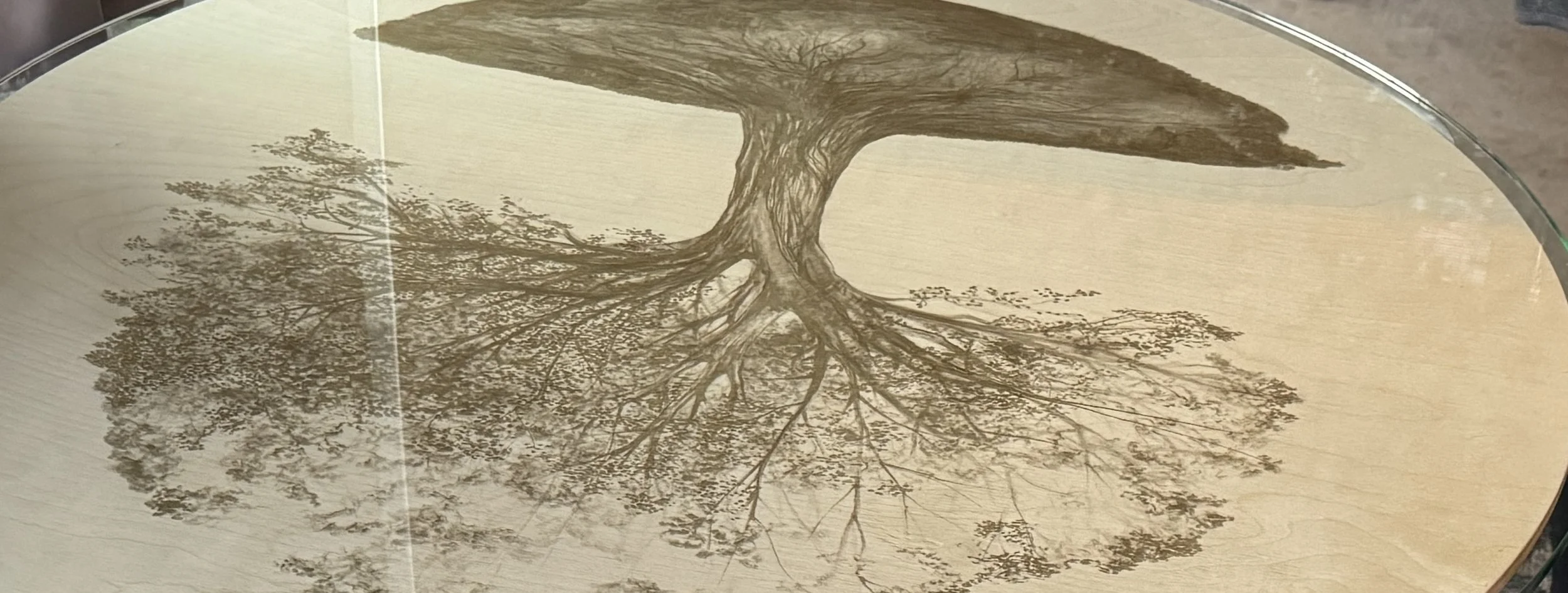
I’ve been working on a few smaller tabletops, drawing the trees on unfinished wood cut into various circles. To say these pieces of ply are cheaper than the carefully crafted birch I got half price from a small business for just shy of $200 to make this 36-inch tabletop for my neighbor’s screened-in porch is an understatement, and I’m missing the smooth, strong, accepting, forgiving surface of this piece.
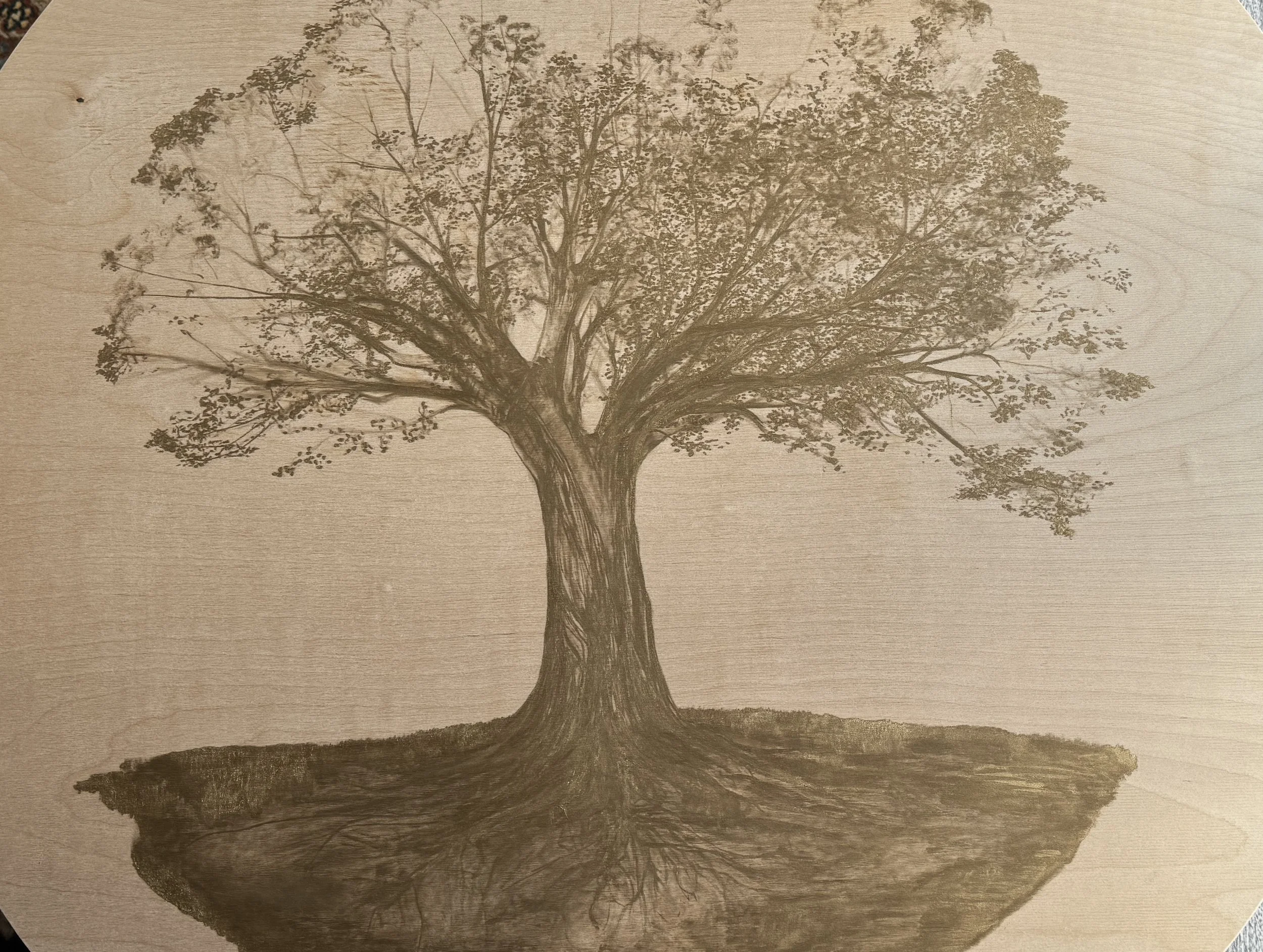
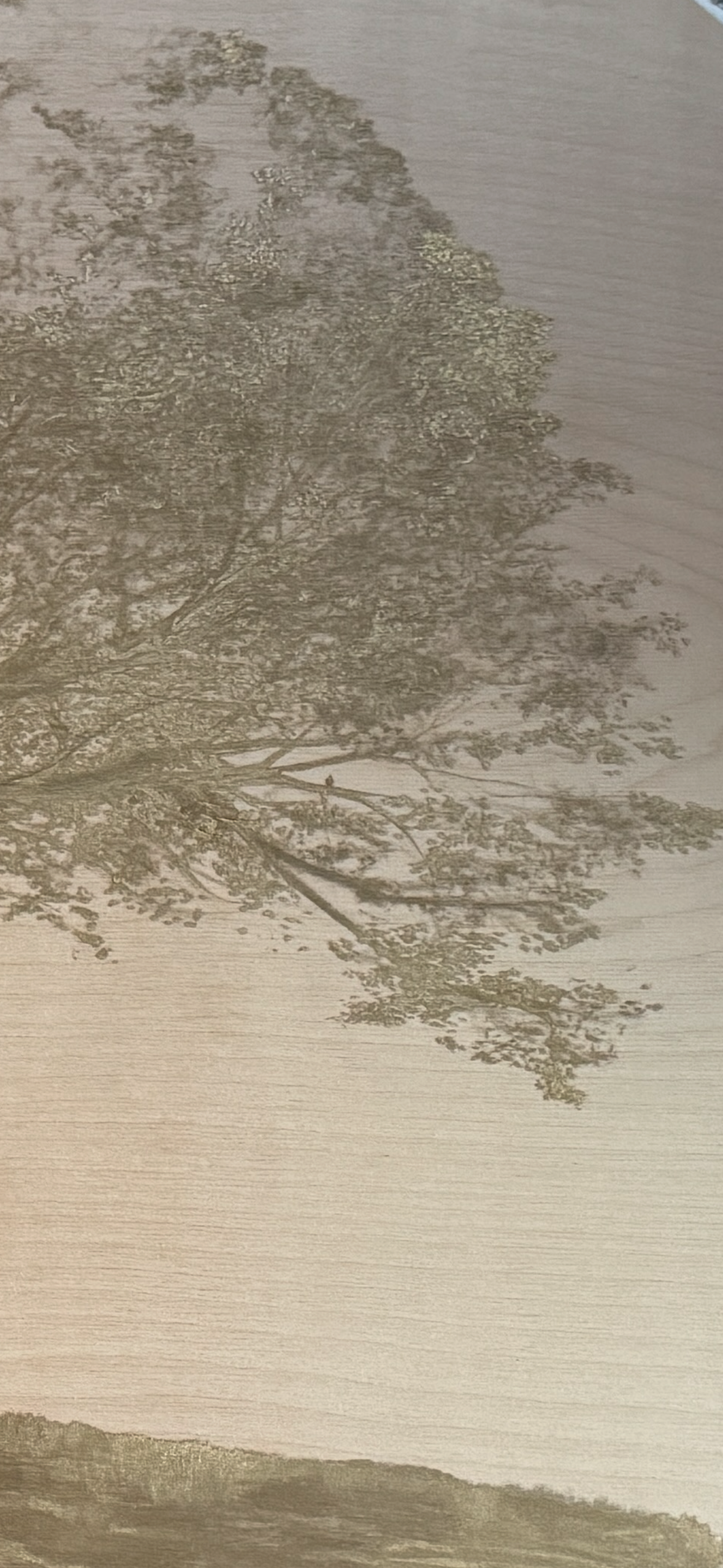
I draw with 18 karat gold leaf mixed with ether, not brass, so it still glitters in the sun. The physicality of gold leaf and the way its complex, subtly tactile surface catches the light makes viewing the trees more like sculpture. It has this element of the placement of the viewer in space around the piece changing the artwork itself, possibly causing an awareness of this fact that our ideas of what a thing is are definitions limited by our perspectives.
If someone puts it in a bad spot (away from windows) in their home—as I am learning people tend to do—the work isn’t just in a bad light, it’s indiscernible, blending into darkness or washed out by bright artificial light.
I haven’t tried making prints of my tree drawings, even those I’ve done on white paper, but I will try it with a few and make a post. Due to these issues of gold leaf and the perspective of the viewer, each two-dimensional drawing on paper has infinite possibilities to be photographed and turned into a print; I’ll try to keep it under a dozen. Video documentation has been best, but I noticed recording the changing colors and details under the shine of it all tends to make it seem like a manufactured showroom piece—still figuring out how to use cinematography to fix this.
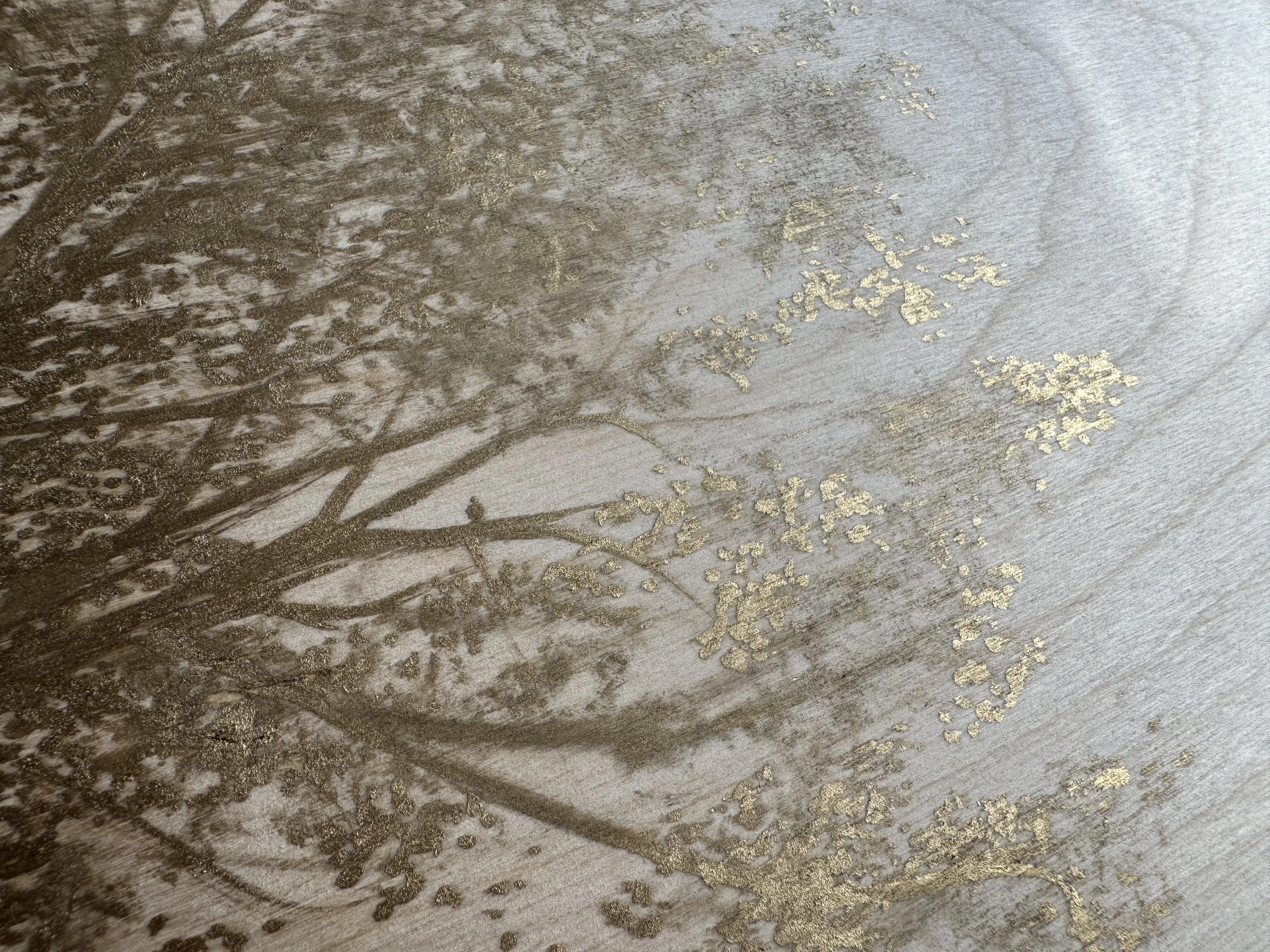
Also on sale at half price (back in August 2025) from a different small business, I ordered this 37-inch circular piece of half-inch tempered glass, which fully protects the artwork while clarifying its details. While gold leaf has stood the test of time, many people have recommended I seal it, and I found that most protectants have something in them that interacts with the gold leaf, eating away at it, or coating it with a white film. This high quality glass clarifies the details in its own right. The wood for this tabletop is 3/4-inch thick, and that proved to be enough (under the weight of the glass, and with the support of the metal table base below) to make it through the Wisconsin winter unscathed.